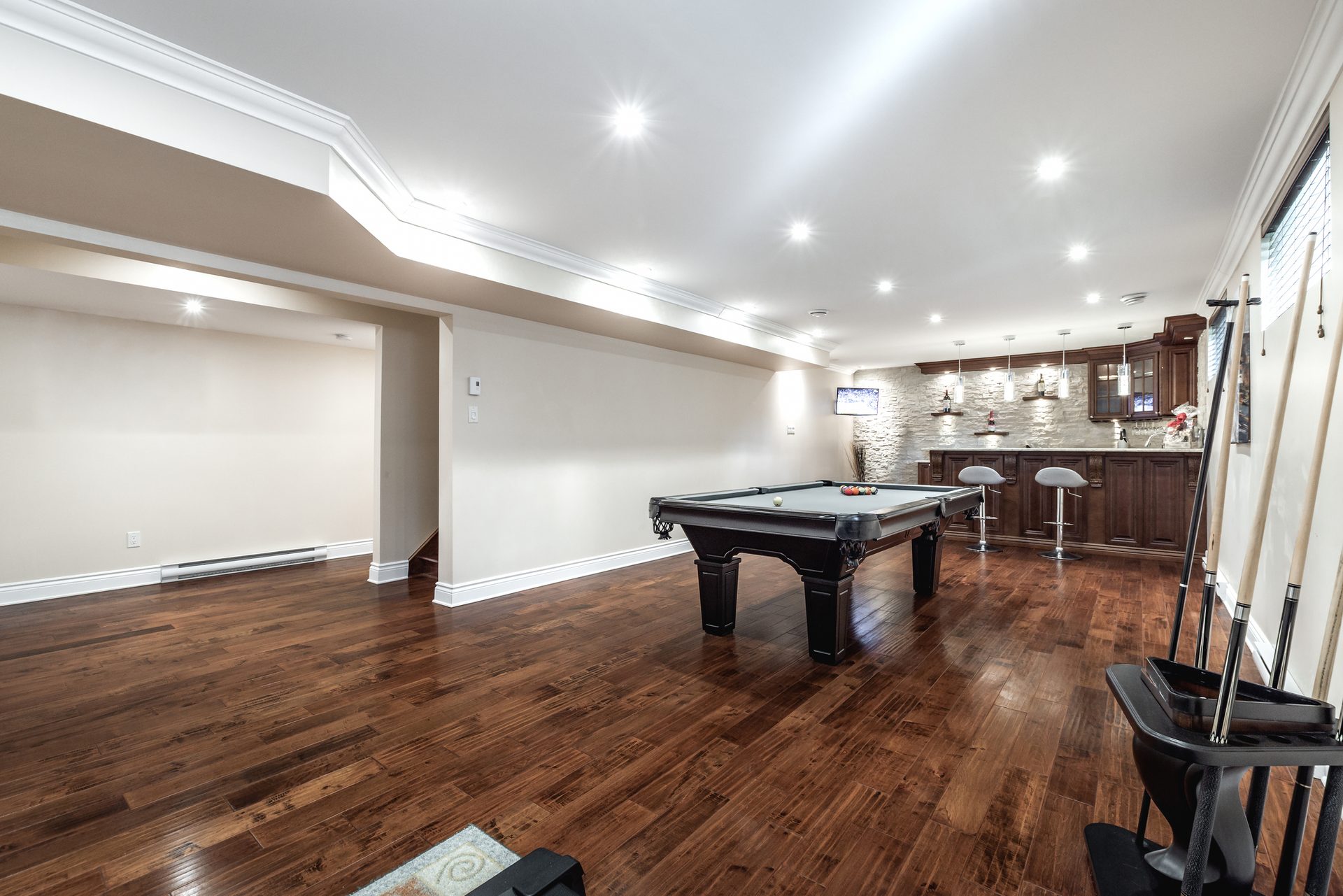
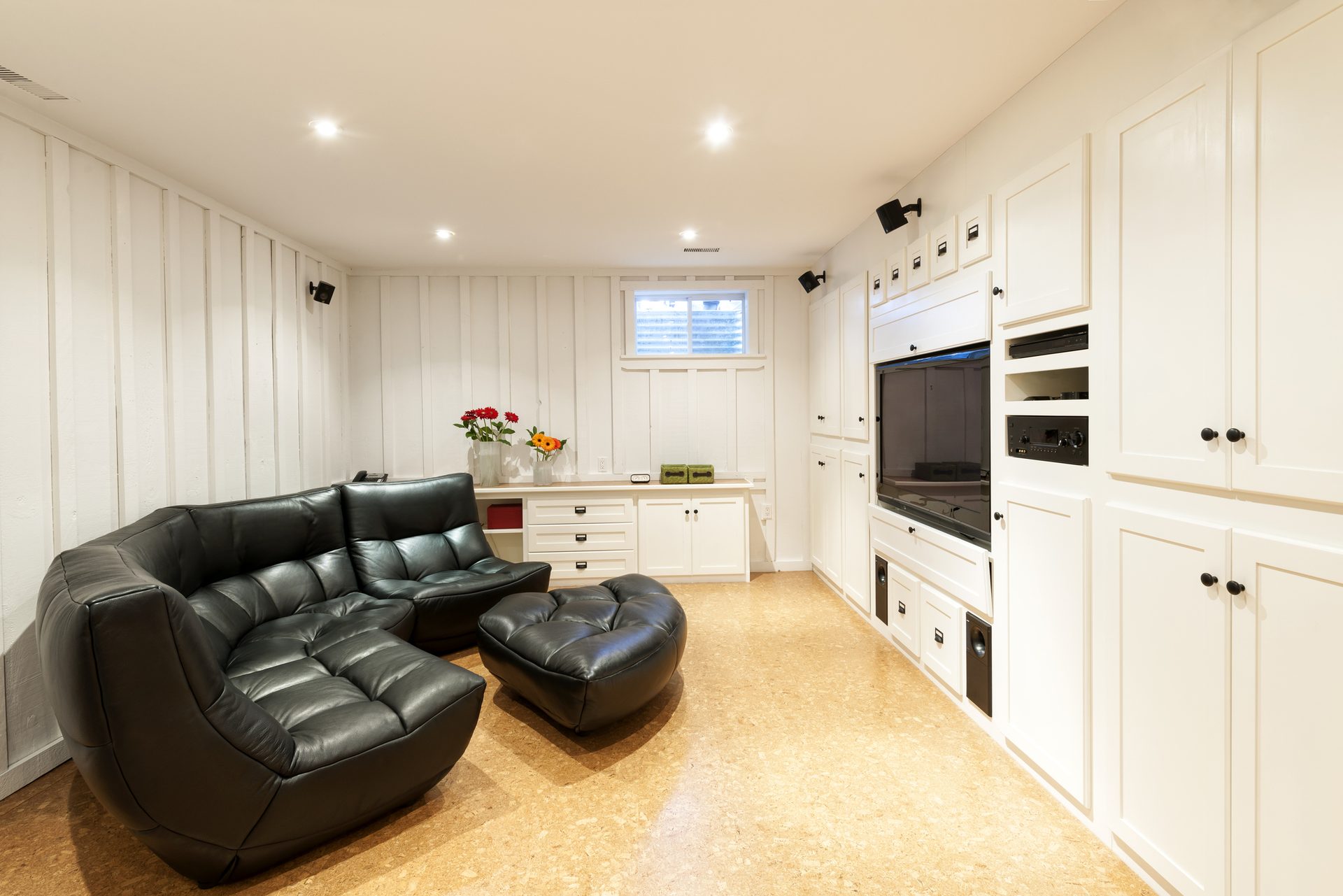
An unfinished Treasure Valley basement is some of the cheapest usable square footage in your house, if it's built correctly. Jones Quality Remodeling turns unused basement space into bedrooms, media rooms, home offices, gyms, bathrooms, and guest suites, and because we hold the general contractor role on most basement jobs, we also handle the less glamorous work that makes a basement actually livable: crawl space repairs and modifications, moisture control, and space-saving layout changes like a pocket door where a swinging door won't clear a tight hallway.
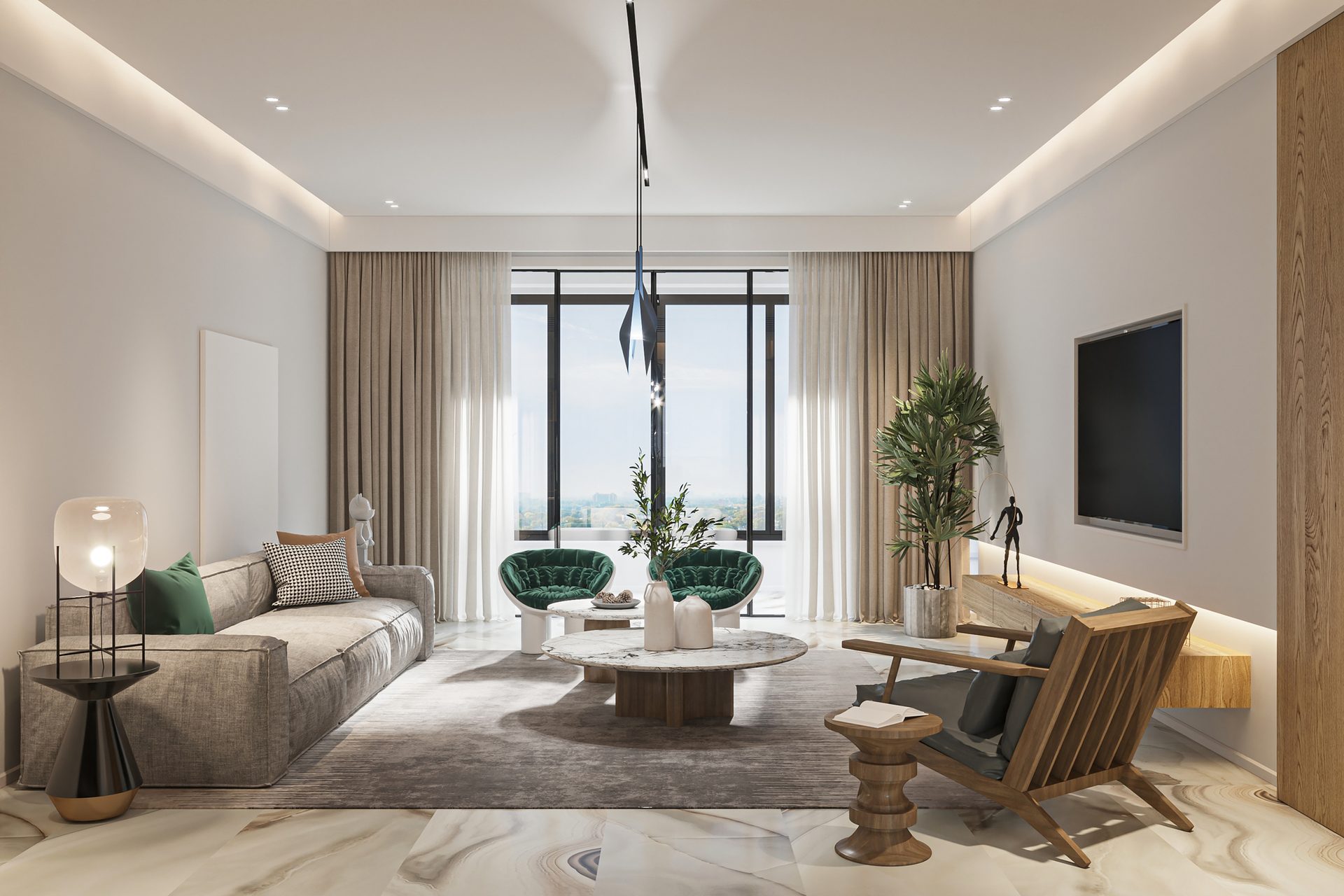
Because we're often acting as general contractor on a basement job, we're well-versed in making something out of nothing: a crawl space repair, a pocket door swapped in to save a few feet of clearance, or a total redesign that leaves you with a brand-new, usable room. That range, from a targeted fix to a full redesign, is the same range we bring to every room in the house, just applied to the one space most homeowners assume has to stay unfinished.
A basement sits below grade, which means it deals with moisture, temperature swings, and humidity in ways an upstairs room never does. We use materials built specifically for that environment (moisture-resistant flooring, basement-rated ceiling systems, and insulation and vapor-barrier approaches suited to below-grade construction) rather than installing the same materials you'd use upstairs and hoping they hold up. This is one of the most common corners cut in basement finishing, and it's the reason some finished basements develop a musty smell or visible mold within a few years.
If a basement space is going to function as a legal bedroom, it needs a code-compliant way out in an emergency: an egress window or door sized and placed correctly. This is one of the first things we look at when a basement bedroom is part of the plan, because it affects where walls and windows can go, not just a finishing detail added at the end. More broadly, basement remodels in Boise and the surrounding Treasure Valley typically require permits once you're adding plumbing, electrical, or converting the space into a habitable room. We manage that permitting and the inspections that go with it as part of the project, rather than leaving it for the homeowner to navigate.
An unfinished basement tends to sit unused for one of a few reasons: it's genuinely just storage and insulation down there with no real plan, there's a known moisture issue nobody's addressed, or the household has grown and needs the space but assumes finishing a basement is a bigger undertaking than it actually is. The first conversation we have is usually about which of those is actually true for your specific basement, because the answer changes the scope significantly. A basement with a real moisture history needs that solved before anything else happens, while a dry, structurally sound basement that's just unfinished is a much more straightforward project.
Bedrooms, family and media rooms, home offices, gyms, bathrooms, and guest suites. We help plan the layout around how you'll actually use the space.
If the room is going to function as a legal bedroom, yes. Egress is one of the first things we evaluate when we design a basement bedroom, and we confirm and handle what your specific space needs as part of the project.
Generally yes, once plumbing, electrical, or habitable-room conversion is involved. We manage the permitting for your basement project.
With materials built for a below-grade environment (moisture-resistant flooring, basement-rated ceiling systems, and the right vapor-barrier approach) rather than standard upstairs materials.
Yes. That means new plumbing runs from the main stack, which we scope and price as part of the project rather than treating it as an add-on surprise.
It varies by what's actually wrong: moisture intrusion, inadequate vapor barriers, insulation that's failed, or structural issues with support piers. We assess the specific crawl space before quoting a fix, since treating every crawl space problem the same way is how the wrong fix gets applied.
Boise, Meridian, Nampa, Caldwell, Star, Kuna, Eagle, Garden City, Middleton, Horseshoe Bend, and McCall.
A permitted, properly-moisture-managed basement finish is generally a lasting asset, while an unpermitted or poorly-waterproofed one can become a liability a home inspector flags during a future sale. That's a large part of why we treat permitting and below-grade materials as non-negotiable rather than optional upgrades.
Standard basement ceiling heights in most Treasure Valley homes work fine for a finish; what typically drives a ceiling conversation is ductwork, plumbing, or electrical that needs to be rerouted around a specific area. We assess that room by room during design, not as a blanket rule.